How to obtain Flight Instructor qualifications?
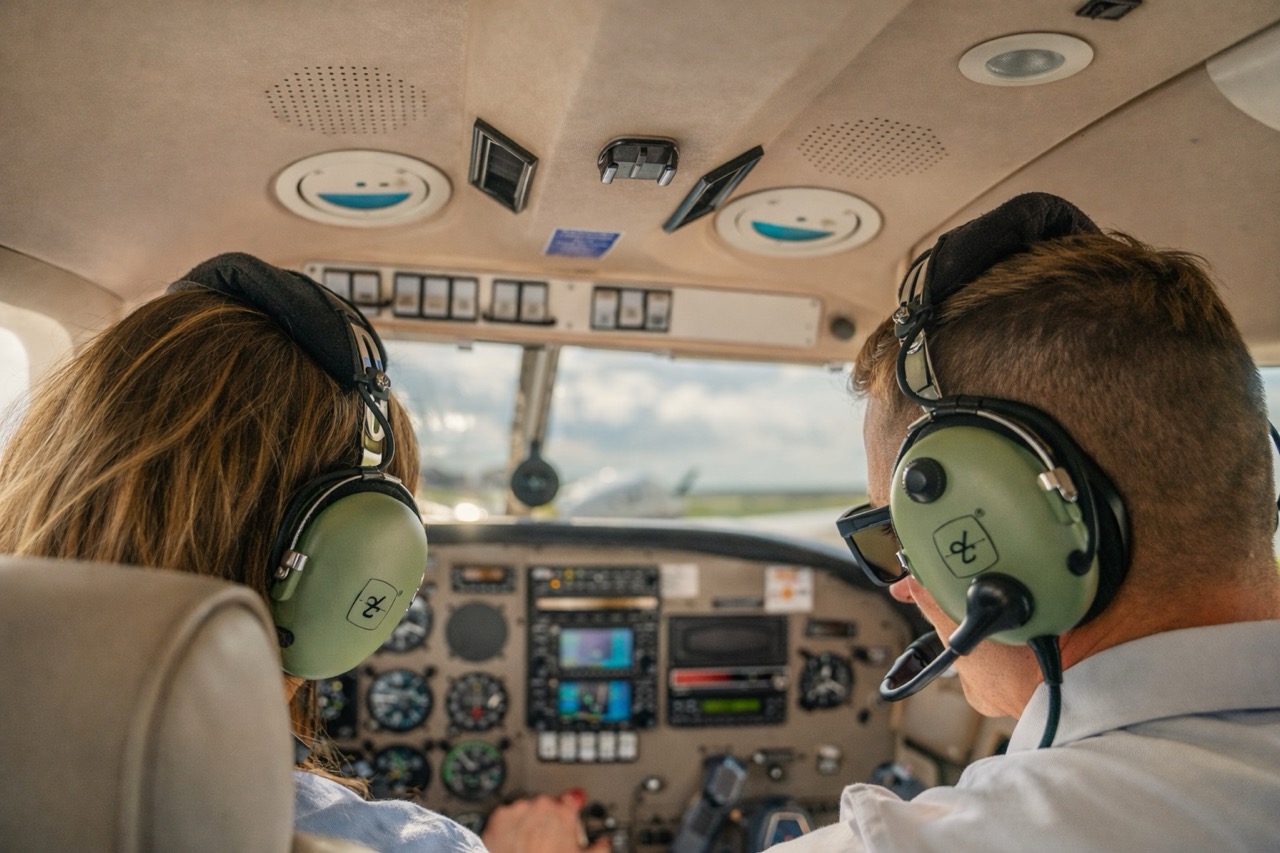
Do you already have significant aviation experience and would like to pass it on to others? Or perhaps sharing your passion for aviation is something you would like to make a central part of your career? In both cases, obtaining Flight Instructor FI(A) privileges is an ideal path – and a valuable milestone in every professional pilot's career. Instructor qualifications remain highly sought after and continue to be in strong demand. This is due to several factors. First, as aviation becomes more widespread, more and more people want to learn to fly. Second, the qualification itself provides extensive practical experience that is difficult to acquire any other way. It is important to remember, however, that obtaining an FI(A) should not be treated merely as a means of building flight hours. A flight instructor is a professional role that demands continuous development, carries significant responsibility, and at the same time brings great personal satisfaction.
What types of instructor ratings are there?
When discussing flight instructor privileges, it is worth noting the other instructor qualifications that fall within this category. Alongside the Flight Instructor FI(A) rating covered in this article, the following ratings also exist:
- TRI – Type Rating Instructor,
- IRI – Instrument Rating Instructor,
- SFI/STI – Synthetic Flight Instructor (simulators),
- CRI – Class Rating Instructor (e.g. multi-engine aircraft),
- MCCI – Multi-Crew Cooperation Instructor,
- FTI – Flight Test Instructor,
- MI – Mountain Flying Instructor.
As can be seen, there are many instructor-related ratings. It is also worth being familiar with the abbreviations HT, CFI, and CTKI. These do not refer to further training ratings, but rather to formal positions within a training organisation. A pilot must first become a qualified instructor with the appropriate experience before being appointed to any of these roles. Briefly, the roles are as follows: HT (Head of Training) is responsible for overseeing the entire training system within the organisation; CFI (Chief Flight Instructor) is responsible for supervising practical flight instructors; and CTKI (Chief Theoretical Knowledge Instructor) performs a similar role to the CFI, but in relation to theoretical instruction.
Who can become a Flight Instructor FI(A)?
A Flight Instructor FI(A) may be a pilot who has previously completed either CPL or PPL training, though the requirements differ between the two cases.
To be eligible to commence FI(A) training, a candidate must have completed at least 10 hours of IFR training on the appropriate aircraft category, of which a maximum of 5 hours may be conducted on a simulator. The candidate must also have completed at least 20 hours of cross-country flight as Pilot-in-Command (PIC).
Additional requirements vary depending on the licence held. CPL(A) holders may apply for FI(A) privileges without any further prerequisites. PPL(A) holders, however, must have a minimum of 200 total flight hours on aeroplanes or motor gliders, including at least 150 hours as PIC. They must also pass the CPL theoretical examination – notably, completing the full training course is not required; passing the examination alone is sufficient.
There are further requirements applicable to all candidates. To become a Flight Instructor FI(A), it is necessary to complete 30 hours of SEP flight time and conduct a VFR cross-country flight as PIC. That flight must cover a distance of at least 540 km, include landings at two different aerodromes, and include a full-stop landing.
FI(A) training itself consists of 125 hours of theoretical instruction and 30 hours of flight training. Prior to commencing the course, the candidate must complete a pre-entry flight assessment with an instructor, during which their current skill level and potential as an instructor are evaluated.
What do FI(A) privileges allow us to do?
What do you actually gain upon completing FI(A) training? First and foremost, the ability to conduct training for basic licences such as PPL and LAPL. You may also train CPL candidates, provided you have accumulated at least 200 hours of flight instruction experience on the relevant aircraft category. In addition, you are qualified to provide training for class and type ratings on single-pilot aircraft, as well as for the Night VFR (NVFR) privilege.
With FI(A) privileges, you may also conduct Instrument Rating (IR) and En-route Instrument Rating (EIR) training, subject to the following conditions:
- at least 200 hours of IFR flight experience, of which a maximum of 50 hours may be conducted on a simulator,
- for multi-engine aircraft, a minimum of 500 total flight hours, including at least 30 hours as PIC,
- completion of the appropriate CRI training (for multi-engine aircraft),
- completion of IRI training and passing a competency assessment.
Initially, privileges are restricted
After completing training and passing the examination, FI privileges are granted with an (R) designation, meaning they are restricted. A restricted FI may conduct training only under the supervision of an unrestricted FI(A). Solo flight authorisations for students may not be issued during this period.
The restrictions may be lifted once the following requirements have been met: completion of at least 100 hours of flight instruction and supervision of at least 25 student solo flights.
A restricted FI may provide training for:
- LAPL and PPL licences,
- SEP class ratings (excluding complex aircraft) and NVFR,
- integrated training, but only up to PPL level.
Let's talk about your dreams
Aviation is best talked about at the airport. Make a casual appointment, we will show you our planes and answer all your questions.